Hormuz war pushes crude freight above $20 a barrel
If Brent drops to $90, how much does your delivered barrel actually fall?
Set against Brent, Goldman's $20 shows why the benchmark now says less about what a delivered crude cargo costs, and who carries the gap.
Goldman Sachs says shipping a barrel of crude now costs over $20, up from $3 a year ago, about a sixth of the oil's price. Most of the rise is war risk in the Strait of Hormuz and extra ship-to-ship transfers. Those costs stay when oil prices fall, so cheaper Brent would not fully lower the cost of delivered crude.
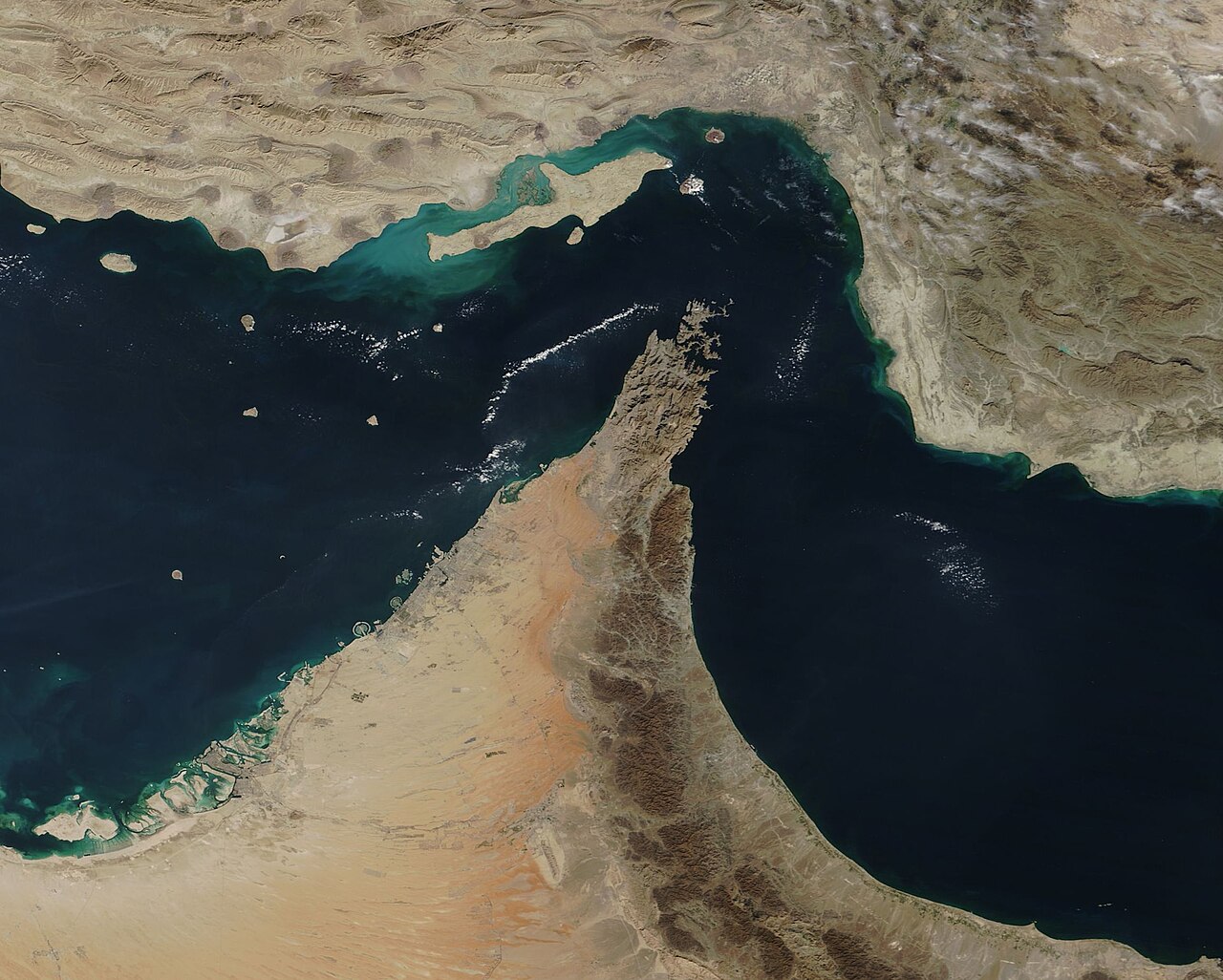
Goldman Sachs said in a research note on 20 October that the war around the Strait of Hormuz has pushed the average cost of shipping a barrel of crude above $20. A year earlier it was about $3. Brent settled at $113.17 on 22 October. At that price, the voyage costs about a sixth of what the barrel is worth.
The same note expects cheaper oil but not cheaper ships. Goldman's baseline has Brent falling to $90 by year-end and averaging $80 in 2027. It also says freight is unlikely to fall sharply while the conflict lasts. If freight holds at $20, it becomes 22% of a $90 barrel and a quarter of an $80 one.
Freight holds because of what it is made of. Goldman puts about $7 of the $17 rise on the war-risk premium for crossing Hormuz. About $4 is fuel. Another $4 is ship-to-ship transfers in the Gulf of Oman. War cover is priced on the hull, transfers by the day and fuel by the tonne. None of these moves when Brent moves.
The transfers carry the cost well beyond the Gulf. Gulf exporters run cargoes out through the strait and move them onto other tankers in safer water. Goldman estimates that nearly one in six tankers in the Persian Gulf and the Gulf of Oman is doing this on any given day. Every one of those ship-days is lost to the rest of the fleet. Trafigura was reported on 7 October to have fixed the very large crude carrier Alexandros from the US Gulf to China for about $76 million. Before the war that run cost $7 million to $10 million. On a 2 million barrel cargo, $76 million comes to about $38 a barrel.
That is why the benchmark now tells you less. Brent is a price at the loading point. A refinery pays the benchmark, plus or minus the grade differential, plus freight and insurance. When freight was $3, Brent was most of that bill. At $20, a fall in Brent lowers only part of it.
The contract decides who pays the rest. BIMCO's voyage war risks clause, in its 2013 edition, makes the charterer reimburse any additional premium the owner's insurers require. So the war premium sits with the cargo. War cover is written on seven-day cancellation terms, so a desk fixing today is pricing an insurance cost it will only know at the transit.
The rate to watch is the US Gulf to China VLCC. When it fixes near $10 million again, this is over. Until then, a lower Brent tells you less than it used to about what crude costs delivered.