DP World to trial driverless trucks at Jebel Ali in Dubai
If a driverless truck hesitates under the crane, your ship stays longer on the berth
The announcement says where in the cargo flow the vehicles work and which systems they must plug into. That handover is where the trial will be judged.
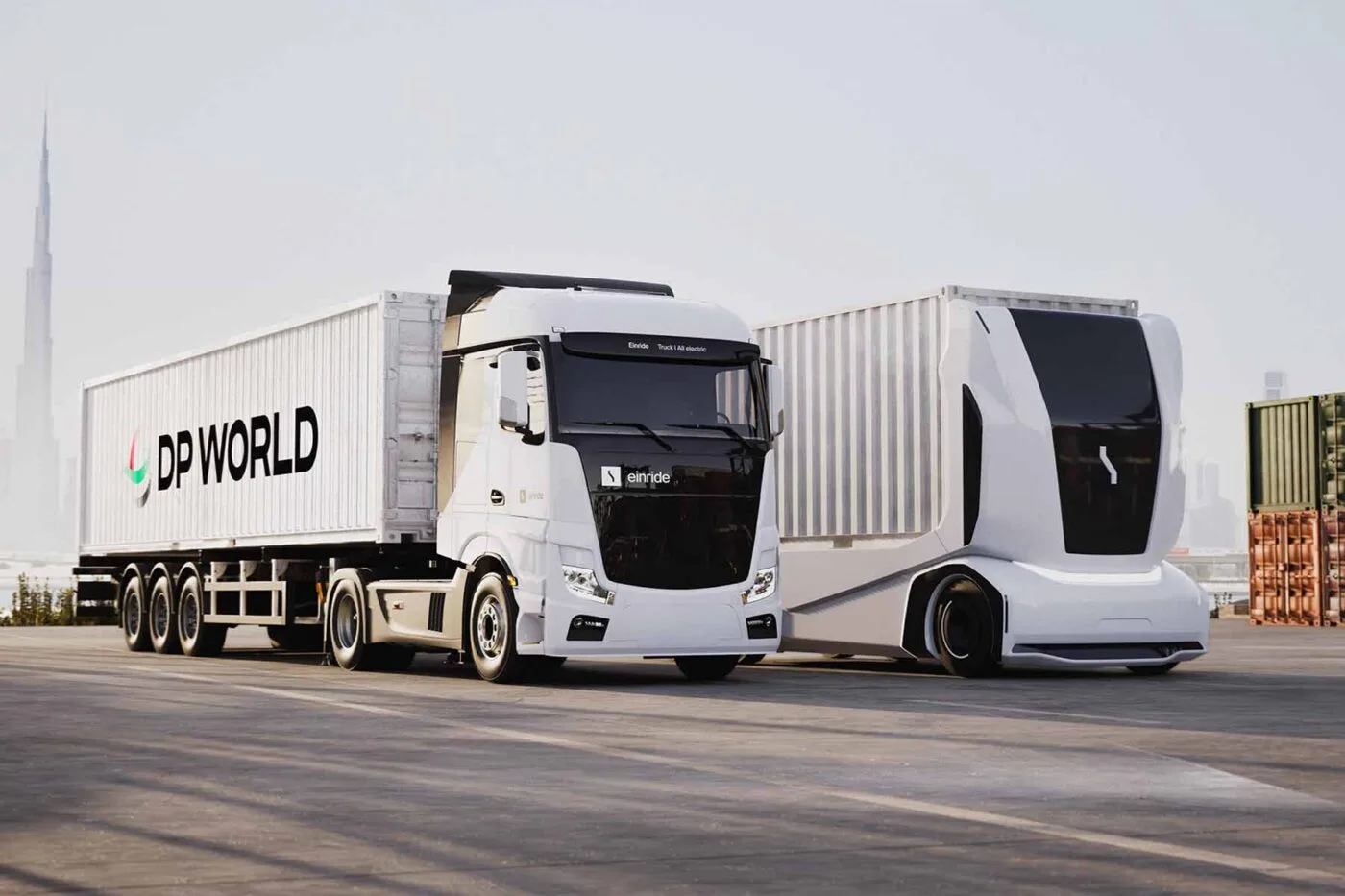
DP World will trial self-driving terminal vehicles at Jebel Ali in Dubai, United Arab Emirates, through SHIFFT, a Dubai venture with UK software firm Oxa. The vehicles carry containers between cranes, yard and gates, so each one must take its orders from the terminal's own systems. Whether those handovers hold on a working vessel decides the trial.
DP World will trial self-driving vehicles at Jebel Ali, its flagship port in Dubai, United Arab Emirates. Its partner is SHIFFT, an autonomous logistics venture that the Dubai Future Foundation set up in August with Oxa, a UK self-driving software company. DP World runs more than 900 vehicles at Jebel Ali. They carry containers between quay cranes, yard stacks, gates and terminals, and each of those moves ends in a handover to another system.
The announcement on 6 November is built around that. The agreement names nine areas of work, and autonomous driving is only one of them. The others include vehicle integration, fleet management and orchestration, traffic management and routing, and operations in mixed-use environments. Most of the agreement covers the systems around the truck.
Follow one box to see why. A container comes off a ship. The terminal operating system has already chosen the truck and the yard block. The truck has to be in the right lane under the right crane when the spreader comes down, in the crane's own sequence. A driver does that by eye and by radio. A driverless truck has to get the same instruction from the system and stop where the crane expects it. In the yard, a stacking crane lifts the box off. The vehicle software owns none of those handovers.
The release gives this one sentence. SHIFFT "will develop integrated solutions designed to operate within DP World's current and future technology environments." So the vehicle software has to fit the systems DP World already runs. That is the right way round. The quay is where a carrier feels the result, and a quay crane is only as fast as the trucks under it. If a driverless truck hesitates in mixed traffic, the crane waits and the port stay gets longer.
So which leg goes first? The release does not say. It also does not say how many vehicles the trial covers, at which terminal, or from when. If I were running it, I would start at the gate and on the inter-terminal road, where a late truck costs minutes, and come to the quay last.
The signal that settles it is a vessel worked with driverless trucks under the crane and no safety driver in the cab. SHIFFT's own target is a first scalable commercial deployment in Dubai before the end of 2027. Until a ship is worked that way at Jebel Ali, the agreement has put the hard work in the right place but has not yet said how close to the quay it will go.
Primary sources
- officialDP World UAE region implements locally developed ZODIAC system DP World, 2021-03-01
- officialDubai Future Foundation partners with DP World to develop autonomous logistics solutions in Dubai and worldwide Dubai Future Foundation (release via Zawya), 2026-11-06
- officialDubai Future Foundation and Oxa launch joint venture transforming Dubai into global hub for autonomous logistics Oxa, 2026-08-03