Hapag-Lloyd resets its peak surcharge on Asia to Southwest Africa
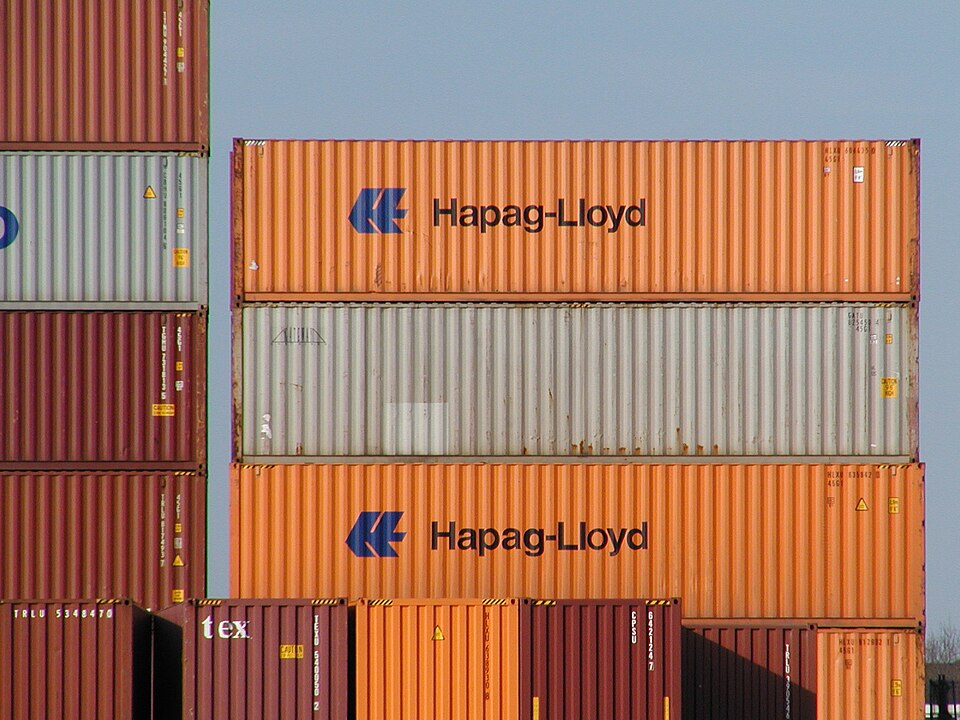
Hapag-Lloyd, CMA CGM and Maersk set different Southwest Africa surcharges
The charge follows the loading date, applies per TEU to every box type, and two rivals priced the same coast differently in the same week.
Hapag-Lloyd is re-setting the peak season surcharge it has charged since spring on cargo from Asia to Southwest Africa, from Cameroon to Namibia. The charge depends on the date a box is loaded, so a delayed box pays it. CMA CGM and Maersk set different prices and rules the same week, so what shippers pay depends on their contracts.
Hapag-Lloyd will charge a peak season surcharge of US$800 per TEU on cargo from Asia and Oceania to Southwest Africa. It applies to boxes loaded on board from 25 October 2026. It covers all container types and 13 ports, from Douala in Cameroon to Walvis Bay in Namibia. It replaces a charge the carrier has had on this lane since April, and it has no end date.
In the same week, CMA CGM put US$550 per TEU on cargo from China to the same coast, starting 22 October. An exporter in China shipping to Luanda in Angola can now see US$550 at one carrier and US$800 at another. Which one he pays depends on the rules each carrier wrote around its number.
Hapag-Lloyd's rule is the loading date. A box that goes on board on 24 October pays the old level. A box that loads on 25 October pays US$800 per TEU, whatever day it was booked. So if a box is rolled at origin, the bill moves with it. A box that misses its vessel waits for the next sailing, and for late-October cargo the next sailing carries the new price.
Maersk wrote its rule differently. Its revised surcharge from China, Hong Kong and Taiwan to West Africa starts on 26 October at US$800 per 20-foot container. On this trade, Maersk fixes the price date at the first sea leg's scheduled departure, as it stands when the booking is confirmed. On that wording, a box rolled after confirmation keeps its booked price. At Hapag-Lloyd, the same rolled box pays the new one.
That matters for anyone running a rate engine. A Hapag-Lloyd quote has to be priced on the expected on-board date, and the invoice checked against the actual one. A system that stamps the surcharge at booking will quote one number and bill another on every box rolled across 25 October.
The contract decides the rest. CMA CGM applies its charge to short-term contracts, and Maersk applies its charge to non-spot bookings only. The Container News report does not say which contracts Hapag-Lloyd's US$800 applies to.
So three things have to be true for the full US$800 to reach an invoice. The contract makes it applicable, or the cargo moves on tariff. The box loads on or after 25 October. And the shipper has no cheaper sailing that week. From China, CMA CGM's notice says there is one.
Check that gap in mid-November. If US$550 and US$800 are both still in force from China, each shipper's own booking split will show which number the market accepted.