Typhoon backlog at Shanghai and Ningbo could last into 2027

Speeding up and skipping calls can't win back a delay that repeats every rotation.
Seven to ten months is long enough that the delay has to go into the plan, and the ships needed to put it there are scarce.
Typhoons have clogged China's biggest container ports, and Sea-Intelligence thinks recovery could take seven to ten months. A delay that comes back on every voyage cannot be caught up, so ships bunch and schedules stop being accurate. Building the delay into schedules would need spare ships, which are scarce, and whether lines do it before Chinese New Year is still open.
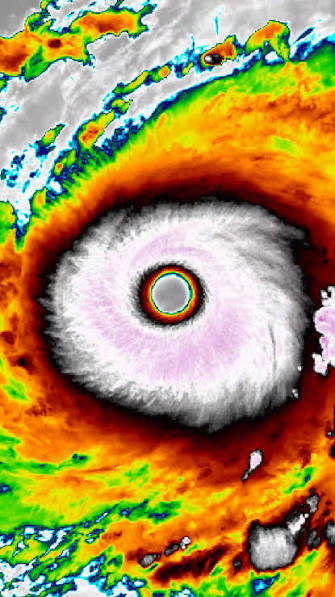
Typhoon closures at Shanghai and Ningbo, China's biggest container ports, have left a queue of ships that was still growing at the start of October. Sea-Intelligence, the Copenhagen-based analyst, estimates the delays now take up 8.5% of the global container fleet. It puts a return to June 2025 conditions seven to ten months away. That runs past Chinese New Year on 6 February and into mid-2027.
Ten months is a long time to call something a disruption. Global schedule reliability was 49.9% in August, the lowest since September 2022. A delay that lasts most of a year is part of the timetable, whether the published schedule says so or not.
When you treat it as a disruption, you try to catch the days back. Kuehne+Nagel data put the average wait at Shanghai at 4.72 days in early September. A ship that loses that much time can steam faster, but fuel burn climbs steeply with speed. Or it can omit a call, which on a weekly service pushes that cargo back a full week. Neither works when the delay repeats every rotation. The late ship ends up on top of the next sailing. Sea-Intelligence counted 12 double sailings on Asia-North Europe in the two weeks around Golden Week.
The alternative is to write the delay into the proforma. The lines did that in 2024, when Asia-Europe services went round the Cape of Good Hope. They added ships to the loops and published longer transit times. That worked because the Cape is a fixed distance. Congestion varies. In the same early-September data, two of Shanghai's Waigaoqiao terminals were above nine days. A schedule that absorbs a delay that varies has to carry buffer, and buffer means ships.
So where would the ships come from? Braemar, the shipbroker, reports virtually no Panamax or post-Panamax tonnage available for charter. The more likely source is the return to Suez, because a loop routed through the Red Sea needs fewer ships than one going round the Cape.
Those freed ships are also the case for waiting it out. Sea-Intelligence expects the backlog to clear into the drop in cargo after Golden Week. It counts the Suez ships in the sharp oversupply it expects after that. Any ship added to a loop now will have to come out again when the queue clears.
The notices the lines send will show which way they went. Blank sailings and one-off omissions mean they are waiting it out. A notice that adds a vessel to a loop, or re-publishes transit times with a stated validity, means they are planning for the delay. So far I have seen the first kind and not the second. A line still selling the summer transit table on 6 February is betting the queue clears by itself.
Primary sources
- Global Schedule Reliability Continues to Plummet in August Sea-Intelligence, 2026-09-29
- August 2026 Reliability in Asia at 32.3% Sea-Intelligence, 2026-09-30
- Golden Week Capacity Distortions Sea-Intelligence, 2026-09-23
- 1.7 million TEU vessel space absorbed in delays Sea-Intelligence, 2026-08-19