CMA CGM weighs ethanol bunkering trials in Singapore
When can you actually order ethanol in the world's largest bunker port?
Singapore writes its bunkering standards from live operations, so a CMA CGM trial would test what its methanol rules do not yet cover: the supplier, the meter and the certificate trail.
CMA CGM may run ethanol bunkering trials in Singapore, and the port authority is exploring a bio-methane trial with it. Singapore writes its fuel rules from real operations, and it has bunkered ethanol only once. So a new trial would mostly test the supplier, the meter and the paperwork. Real progress would show up as an ethanol standard or licence.
Singapore's Maritime and Port Authority (MPA) said on 26 November that CMA CGM is evaluating ethanol bunkering trials in the port. Singapore is the world's largest bunker port. It has bunkered ethanol once, about 5,000 tonnes into the Maersk Halifax in October. The release names no ship, no date and no supplier.
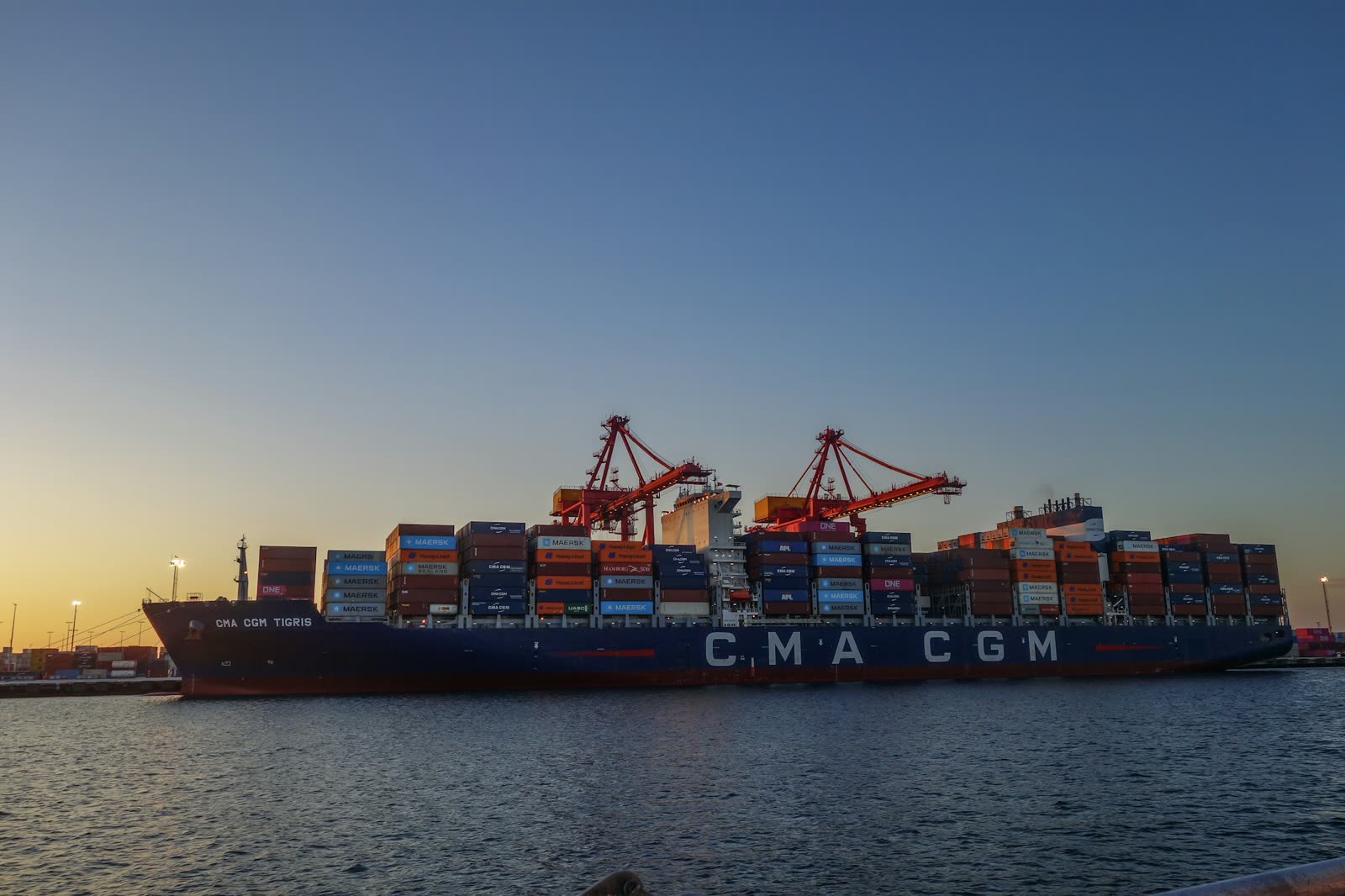
The ship is the settled part. CMA CGM Iron is a 13,000 TEU container ship delivered in 2025. Its Everllence B&W engine is certified to run on bioethanol, and in July it took its first bioethanol from a barge in Santos, Brazil. So what would a Singapore trial test? Mostly the port. MPA's brief covers "associated bunkering procedures, safety considerations, and operational requirements."
That follows from how Singapore brings in a new fuel. It runs live operations first, writes the standard from them, and licenses suppliers last. With methanol, the first bunkering of a container ship in July 2023 fed TR 129, the methanol bunkering technical reference, published in March 2025. Supply licences came after it, valid from 1 January 2026.
Ethanol is at the first step, and only one operation stands behind it. MPA said the Maersk Halifax job was meant to show how TR 129 "could be adapted for ethanol." A CMA CGM trial would give it a second set of data, and two gaps matter most.
The first gap is the supplier. Singapore's three licences are held by Global Energy Trading, Golden Island and PetroChina International (Singapore), and they name methanol and nothing else. None of MPA's releases describes an ethanol supply licence. The second is the meter. TR 129 makes the mass flow meter the centre of quantity measurement. A meter proven on methanol has to be proven on ethanol before its reading can settle a quantity dispute.
The same release adds a joint trial of liquefied bio-methane, the renewable form of LNG. There the pumping is routine, because CMA CGM already bunkers LNG in Singapore regularly. The difficulty is on paper. The renewable gas mixes with fossil LNG in shared infrastructure, so the emissions saving travels on a certificate. That certificate has to be accepted by frameworks outside Singapore, and the release does not name them.
So progress will show up as a document. Methanol took about two and a half years to go from the first container ship bunkering to licensed supply, and ethanol now stands roughly where methanol stood in 2023. The thing to watch is an MPA technical reference, or a supply licence, that names ethanol. Until one appears, this is a carrier with ethanol-certified engines telling the world's largest bunker port that it would like to be next.
Primary sources
- officialCMA CGM, Copersucar and Bunker One Complete First Bioethanol Bunkering of a Deep-Sea Containership in Santos CMA CGM, 2026-07-15
- officialSingapore Strengthens Multi-Fuel Bunkering Capabilities and Digitalisation at SIBCON 2026 Maritime and Port Authority of Singapore, 2026-10-14
- officialMPA, CMA CGM and SLNG Sign Memorandum of Understanding to Advance Liquefied Bio-Methane as Marine Fuel Pathway Maritime and Port Authority of Singapore, 2026-10-14
- officialCMA CGM Advances Partnership with Maritime Singapore in Maritime Talent, Innovation and Sustainable Shipping Maritime and Port Authority of Singapore, 2026-11-26
- officialSingapore to Award Licences for Methanol Bunkering Maritime and Port Authority of Singapore, 2025-11-24
- officialSingapore launches new standard on methanol bunkering, paves way for maritime industry's transition to sustainable alternative fuels Maritime and Port Authority of Singapore, 2025-03-10
- officialRotterdam-Singapore Green and Digital Shipping Corridor Conducts end-to-end Sustainability Certification Pilot for Liquefied Bio-methane Bunkering Maritime and Port Authority of Singapore, 2024-11-28