Hapag-Lloyd doubles third-quarter earnings on higher rates
Will this quarter's spot rates survive the 2027 contract talks?
Hapag-Lloyd does not publish how much of its cargo moves at spot, so this reads its own rate figures for where the extra money came from and how long it can last.
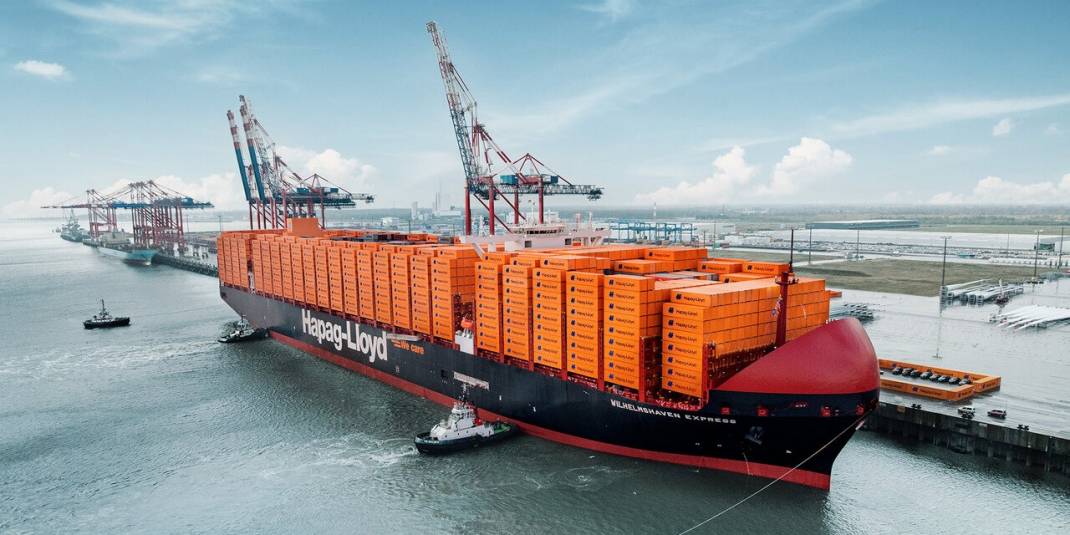
Hapag-Lloyd, the German container line, nearly doubled its third-quarter earnings without carrying more cargo. Its ships were full, so all of the gain came from higher prices, mostly on cargo sold at weekly spot rates. Those rates can fall fast, so the real test is how much of this level the carrier can lock into its 2027 contracts.
Hapag-Lloyd, the Hamburg container line, reported third-quarter EBITDA of USD 1.73 billion on 12 November. A year earlier it was USD 866 million. It carried the same 3.4 million TEU, and the average freight rate rose to USD 1,808 per TEU from USD 1,413. How much of that carries into next year depends on the 2027 contracts now being negotiated.
The volume could not move. Utilisation on the main East-West headhaul legs was above 98%, so all of the gain had to come from price. Against the second quarter, the average rate rose by USD 333 per TEU. On 3.4 million TEU, that is about USD 1.1 billion of extra revenue. EBITDA rose by about USD 900 million.
Inside one quarter, almost all of a rate move like that comes from spot cargo. Contract cargo moves at the rate agreed at renewal, usually once a year. Spot reprices every week. On a ship that full, contract customers get the slots their contracts promise, and the allocation desk sells what is left at the going rate. The rest of the move comes from bunker surcharges, which float on contract cargo too.
So how big is the spot layer? The last split I can find is from November 2022, when the CEO put a little over half of volume on long-term contracts. If that still holds and contract rates stayed flat, the spot half rose by something like USD 650 to 750 per TEU between Q2 and Q3. The bunker part of the move makes the true figure smaller.
That is money that reprices weekly, in both directions. It stays only if part of it lands in the 2027 contracts. Talks for those are starting now, including Asia-Europe. The CEO expects them to close above 2026, with bunker costs alone pushing them up.
Shippers have a reason to wait. Just over half of the capacity is back on the Suez routing. Nearly all of it is due back by the end of the first quarter of 2027. That frees more than ten Hapag-Lloyd ships. The CEO expects market capacity to grow 8 to 9% next year, against demand growth of about 4%. In September, Drewry said returning Suez capacity was already pushing Asia-Europe spot rates down. Shanghai-Rotterdam fell to USD 3,485 per 40-foot container in the week of 24 September.
Watch the Asia-Europe contracts that close in December and January. If they settle well above 2026 levels, part of this quarter becomes next year's base rate. If they settle near a softening spot market while the Suez ships come back, Q3 2026 will look like a spot quarter in the 2027 accounts.
Primary sources
- officialInvestor Report H1 2026 Hapag-Lloyd, 2026-08-13
- officialHapag-Lloyd further raises its earnings outlook for the current financial year Hapag-Lloyd (EQS ad hoc via Deutsche Börse), 2026-09-28
- officialHapag-Lloyd with a strong third quarter Hapag-Lloyd (release via Hellenic Shipping News), 2026-11-13