Hapag-Lloyd raises rates from North Europe to South Asia
Does the December increase touch your contract rate?
What the December filing reaches on a backhaul lane, who pays it first, and why a 40-foot box still costs less than a 20-foot.
Hapag-Lloyd is raising its listed price for shipping containers from North Europe to India, Bangladesh and Sri Lanka from 1 December. Only cargo booked at that listed price pays it straight away. Shippers with contracts keep their agreed rates and meet the new price at renewal. There it is only as strong as what spot cargo really pays.
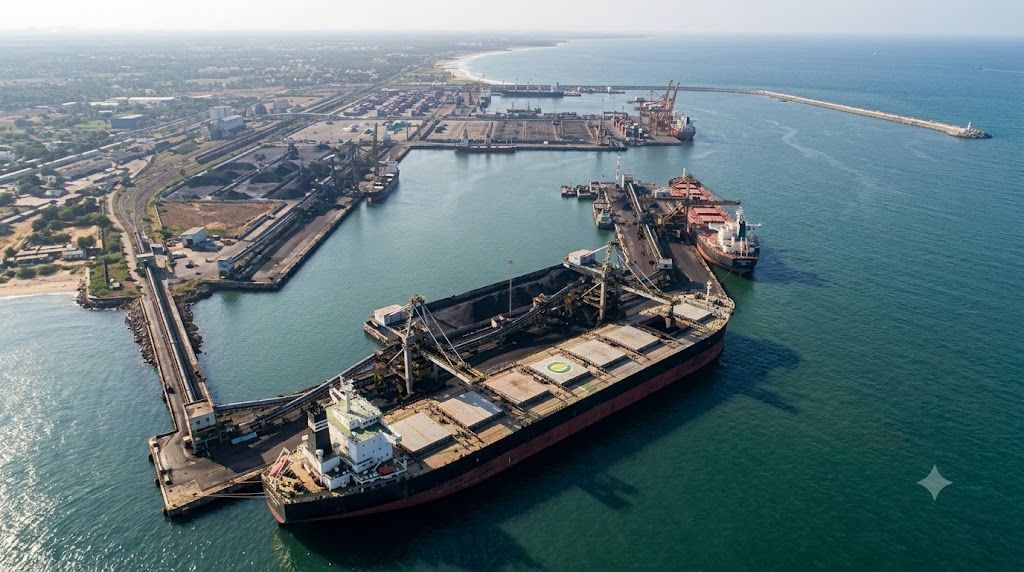
Hapag-Lloyd is raising its base ocean tariff for dry containers from North Europe to South Asia, for sailings from 1 December. The filing covers Ennore, near Chennai on India's east coast, Chittagong in Bangladesh and Colombo in Sri Lanka. A 20-foot box goes up US$200. A 40-foot goes up only US$100.
That split looks backwards until you read the lane as a backhaul. From December a 40-foot to Chittagong is listed at $455, and a 20-foot at $1,540. The bigger box is cheaper because of what it carries on the way back. Bangladesh and Sri Lanka ship garments to Europe mostly in 40-foot high cubes. A 40-foot that comes east loaded, at almost any rate, beats one repositioned empty.
Colombo shows how low "almost any rate" goes. A 40-foot from North Europe was listed at $155 before September. A September filing took it to $255, and December takes it to $355. In the other direction, Hapag-Lloyd set a 40-foot from Colombo to North Europe at $4,536 from 1 August. The box going east earns less than a tenth of that.
So the 20-foot takes the bigger increase. Heavy European cargo travels in 20-foot boxes. A 20-foot to Ennore goes from $714 to $914. Bunker, security and terminal handling charges come on top.
Who actually pays the $914 from 1 December? Only cargo booked on the tariff. That means spot bookings and freight-all-kinds cargo, much of it forwarders buying box by box. A shipper with a service contract stays on the contract rate. The filing does not mention contracts. A contract base rate does not move because the tariff did.
The contract shipper meets the December figure later, at renewal, as the carrier's opening number. That number is only as strong as what spot cargo actually pays. The analysts at Ti Insight made this point in February about the westbound leg. Published tariffs are list rates, and net rates on the corridor can be materially lower.
So watch the spot price quoted on December and January sailings. If forwarders are still paying the new base in January, $914 for a 20-foot to Ennore, the increase held.