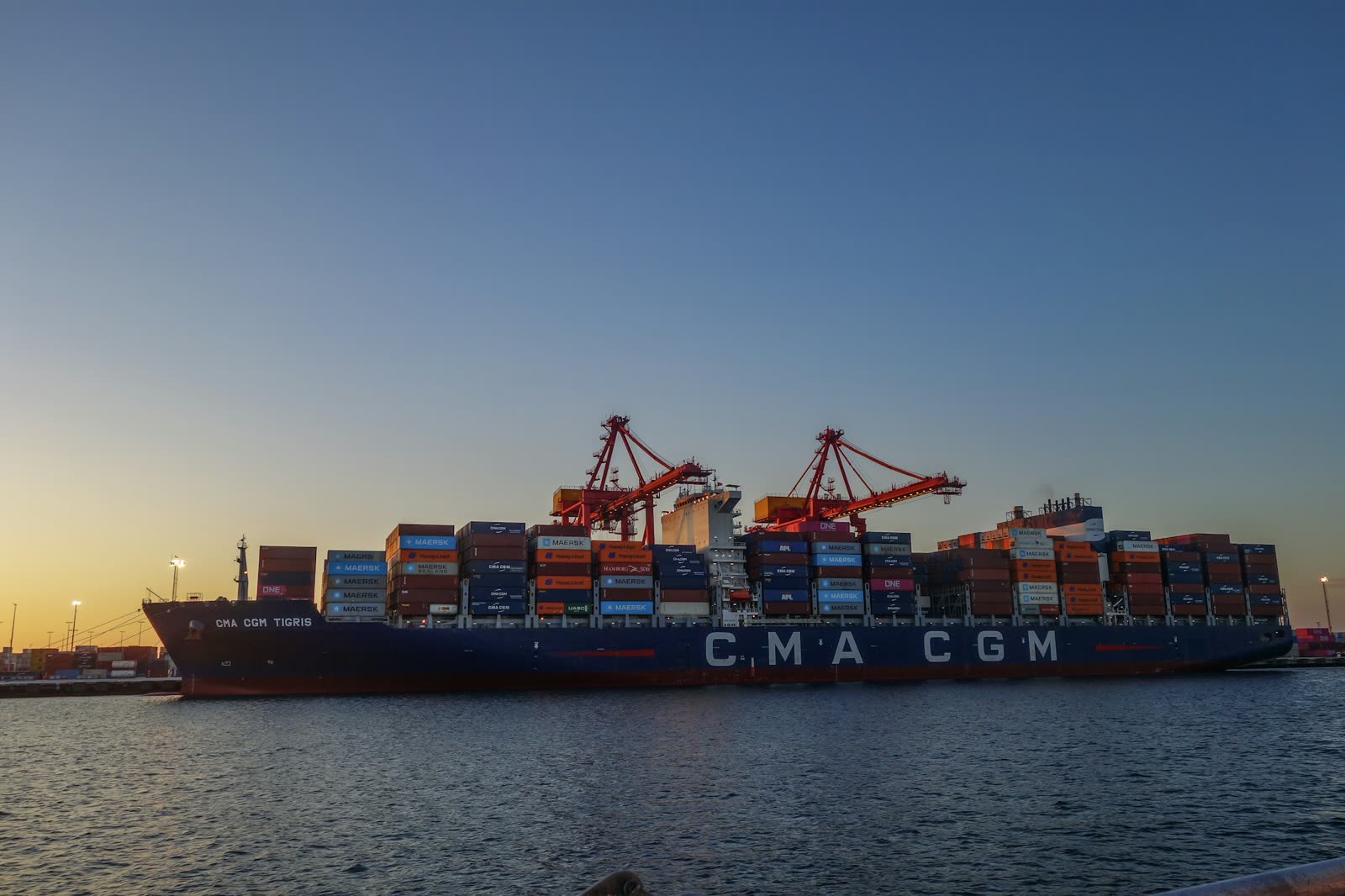
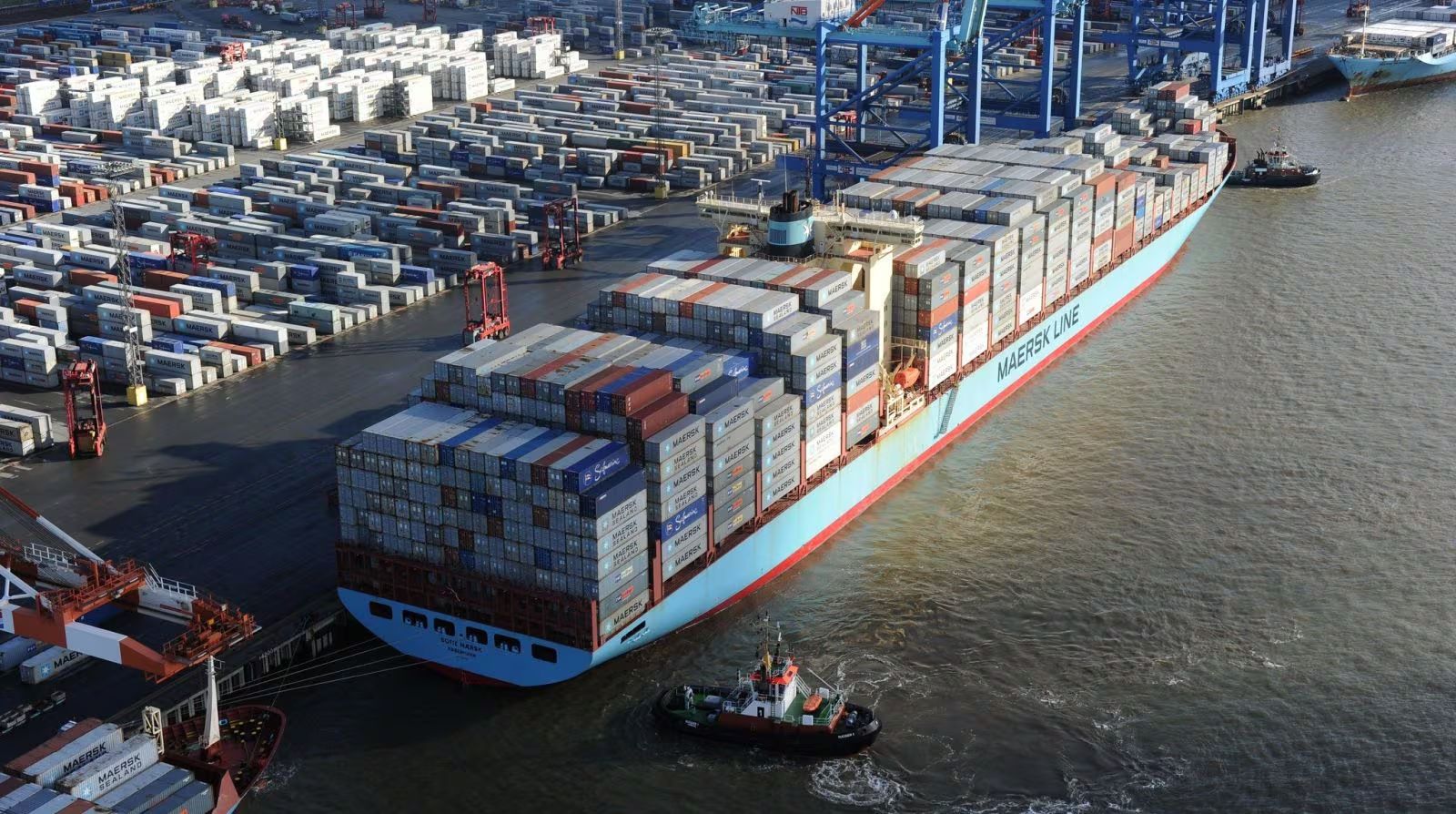
Maersk container ship knocks down a crane at Yantian
Will the biggest ships now wait longer off Yantian on windy days?
How a 366 metre ship comes alongside in a wind warning, which half of the margin belongs to the terminal, and the two facts nobody has published yet.
A Maersk container ship knocked down a quay crane while berthing at Yantian in southern China, on a day with a strong wind warning. A ship that size catches a lot of wind, and quay cranes stand at the edge of the berth. The investigation must show whether the ship's approach or the crane's position left too little margin.
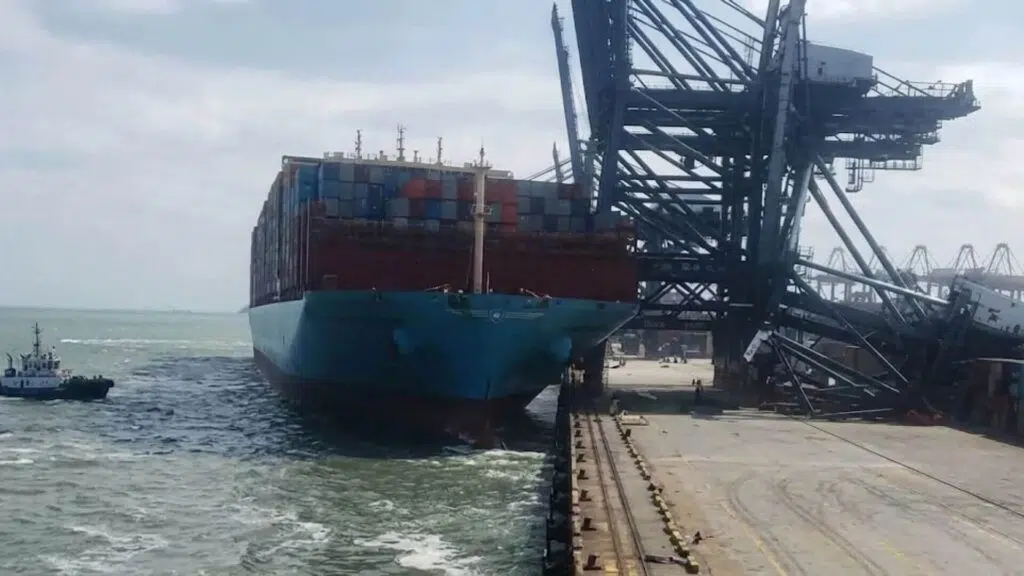
The 15,516 TEU container ship Maersk Cincinnati brought down a ship-to-shore crane around midday on 9 November. She was coming alongside berth 12 at Yantian International Container Terminals, in Shenzhen in southern China. At 06:10 that morning, Shenzhen's weather observatory had put the port under a strong monsoon warning, with gusts of force 8 or more forecast. On 10 November, Shenzhen's Yantian District Emergency Management Bureau said the accident is under investigation. There are no confirmed reports of injuries.
The crane fell back towards the container yard. That points to a push on the water side of the structure. Either the hull hit the legs, or the ship's superstructure hit a boom that was still down. The photos in circulation do not show which. Neither Maersk nor the terminal had given a detailed account by 11 November.
So which one was it? The answer tells you whether the margin ran out on the ship's side or the quay's side.
On the ship's side, the problem is wind. In the last stage of berthing, a 366 metre ship moves mainly on her tugs, with the pilot setting the pace and the angle. She closes on the fenders slowly and sideways. Her hull side and deck stack together work as a sail. In a case the Korean Maritime Safety Tribunal investigated, wind of only Beaufort 4 to 5 pushed a large container ship into a gantry crane, and the crane collapsed. Force 8 gusts are a good deal stronger than that.
On the quay's side, the question is where the crane stood. Before a large ship berths, the usual sequence is to raise the booms and move the cranes clear of where the bow and the accommodation will land. If the boom was down, the problem sits inside the terminal.
The two answers lead to very different fixes. If the wind was to blame, expect tighter berthing limits for the largest ships at Yantian through the winter monsoon, and more of them held off the berth on gusty days. Those are the ships that already wait longest. Xinde Marine News reported that Hapag-Lloyd's 4 November update put average waiting at Yantian at 2.5 days for ships over 300 metres. Smaller ships waited half a day. If the crane line was to blame, the terminal changes its own procedures and schedules barely notice.
What to watch for is the bureau's finding on the wind recorded at berth 12 around noon, set against the Shenzhen pilotage limit for berthing ships over 350 metres.
Primary sources
- officialYantian portfolio page (berths, quay length, quay cranes) Hutchison Port Holdings Trust
- MARS 202534: Not so slow crane wreck The Nautical Institute, 2025-08-28
- TT Talk - Crane collisions & allisions TT Club, 2020-11-03